
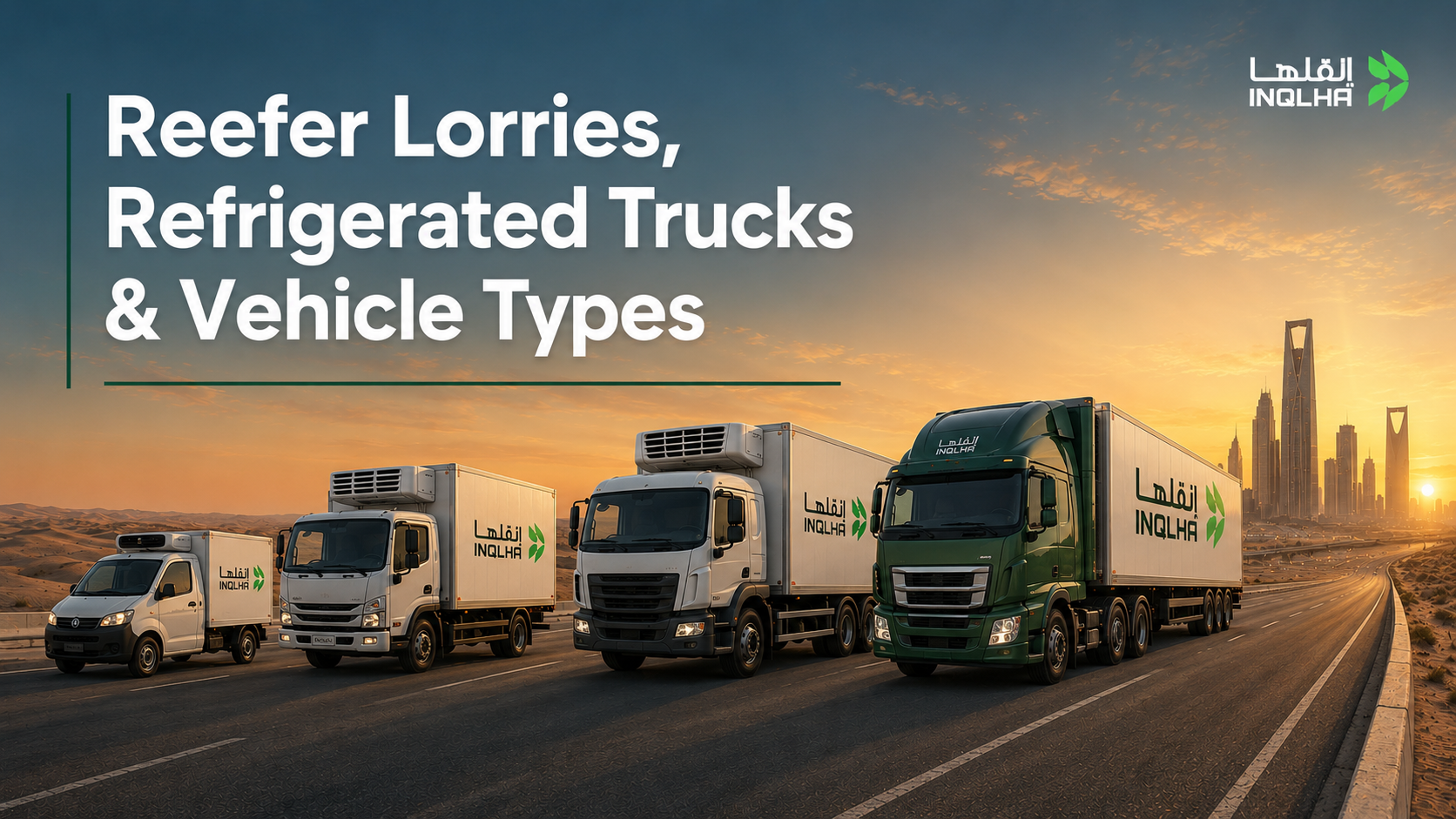

Choosing the right refrigerated truck in Saudi Arabia involves more than selecting a vehicle by name or size. A small urban food delivery has very different requirements from a full commercial load traveling between cities, while chilled, frozen, pharmaceutical, and other temperature-sensitive cargo may require different refrigeration capabilities.
Refrigerated transport vehicles range from small insulated vans and light commercial vehicles to medium box trucks, large reefer trucks, and refrigerated trailers. The right choice depends on cargo weight and volume, temperature requirements, route length, delivery frequency, loading conditions, and the refrigeration system installed in the actual vehicle.
Quick Summary
- There is no single refrigerated vehicle that is suitable for every type of shipment.
- Small refrigerated trucks and vans can work well for lower-volume and urban distribution requirements.
- Medium and large refrigerated trucks are generally better suited to higher-volume commercial cargo and intercity transport.
- A refrigerated truck and a freezer truck may look similar, but the required refrigeration performance can be different.
- Vehicle capacity should be assessed using cargo weight, volume, dimensions, pallet count, and airflow requirements.
- Reefer systems can operate as single-temperature or multi-temperature configurations depending on the vehicle setup.
- Some temperature-sensitive shipments require temperature indicators or data loggers during transportation.
Start with the cargo, not the truck
Define the product type, shipment weight, dimensions, pallet or carton count, required temperature, route, and number of delivery stops before choosing a refrigerated vehicle.
What Types of Refrigerated Trucks Are Used in Saudi Arabia?
Refrigerated transport can be handled by several vehicle categories depending on the size and operating requirements of the shipment. Manufacturers of transport refrigeration systems provide solutions ranging from light commercial vehicles and small delivery vans to medium trucks, large straight trucks, and refrigerated trailers.
The refrigeration unit itself is also selected according to factors such as cargo type, vehicle size, ambient conditions, and whether the load requires chilled, frozen, or multi-temperature transport.
Refrigerated Vans & LCVs
Smaller refrigerated vehicles commonly used for lower-volume loads, urban deliveries, and distribution where a full-size truck is unnecessary.
Small & Medium Reefer Trucks
Suitable for commercial loads requiring more cargo capacity while retaining flexibility for distribution and delivery operations.
Large Refrigerated Trucks
Used for larger commercial loads, palletized shipments, and routes requiring greater cargo capacity.
Refrigerated Trailers
Higher-capacity solutions for major commercial shipments, long-distance transport, and large-scale cold-chain distribution.
Vehicle category does not guarantee a fixed capacity
Two trucks from the same general category can have different box dimensions, payload limits, insulation, and refrigeration systems. Always evaluate the specifications of the actual vehicle assigned to the shipment.
When Is a Small Refrigerated Truck the Right Choice?
A small refrigerated truck or refrigerated van can be a practical choice when the shipment does not require the capacity of a larger truck. Transport refrigeration manufacturers offer dedicated systems for vans, light commercial vehicles, and small insulated box trucks carrying fresh or frozen products.
These vehicles can be particularly useful for urban distribution, restaurant and retail supply, branch deliveries, smaller commercial loads, and routes that involve locations where larger trucks may be less convenient.
Smaller Cargo Volume
Suitable when the shipment fits comfortably within a smaller insulated cargo body without restricting airflow.
Urban Distribution
Useful for deliveries between suppliers, restaurants, stores, branches, and other locations inside cities.
Multiple Local Stops
Smaller vehicles can offer greater flexibility for certain multi-drop routes where access and maneuverability matter.
Fresh or Frozen Cargo
A small vehicle may transport chilled or frozen goods when its refrigeration unit and insulation are suitable for the required conditions.
Small truck does not mean limited refrigeration capability
The important factor is the refrigeration system installed in the vehicle. Some small and light commercial vehicle systems are designed for fresh and frozen applications, while others may have different operating capabilities.
Refrigerated Trucks for Medium and Large Loads
As shipment size increases, vehicle payload, cargo-box dimensions, refrigeration capacity, loading arrangement, and airflow become increasingly important. Medium and large refrigerated trucks are commonly used when businesses need to move pallets, higher-volume food shipments, or commercial cargo between warehouses, production facilities, branches, and distribution centers.
Large refrigerated trailers provide even greater capacity for high-volume and long-haul operations. However, choosing the largest available vehicle is not automatically the right solution. The truck should match the actual cargo requirement and the operational conditions at both pickup and delivery locations.
Medium Loads
- Moderate cargo volumes.
- Medium refrigerated box trucks.
- Commercial distribution routes.
- Potentially easier access to some delivery locations.
- Vehicle capacity should still match actual load dimensions.
Large Loads
- Higher pallet or product volumes.
- Large refrigerated trucks or trailers.
- Suitable for major commercial distribution.
- Common for longer intercity routes.
- Requires careful loading and airflow planning.
Vehicle category can also influence refrigerated transport cost in Saudi Arabia, which is why using a vehicle that closely matches the cargo requirement can make transport offers easier to compare.
Not sure which refrigerated vehicle fits your shipment?
Share the cargo type, shipment size, route, and temperature requirements to start exploring suitable carrier and vehicle options.
Refrigerated Trucks vs Freezer Trucks: What Is the Difference?
The main difference between refrigerated and freezer transport is not necessarily the truck body itself. What matters is the temperature required by the product and the ability of the refrigeration system to maintain that condition throughout the journey.
A vehicle carrying chilled goods may operate under different conditions from one transporting frozen or deep-frozen products. Refrigeration-unit capacity, insulation, outside temperature, route duration, door openings, and cargo loading can all affect performance.
| Factor | Refrigerated Truck | Freezer Truck |
|---|---|---|
| Cargo Type | Products requiring chilled or controlled conditions | Products that must remain frozen during transport |
| Temperature Requirement | Defined according to the product specification | Requires equipment capable of maintaining the required frozen conditions |
| Refrigeration System | Must match the cargo body and required chilled range | Must provide adequate performance for lower-temperature applications |
| Insulation | Helps minimize heat transfer into the cargo area | Particularly important when there is a larger temperature difference between the cargo area and outside conditions |
| Door Openings | Can disrupt internal temperature conditions | Should be carefully managed to reduce warm-air infiltration |
For shipments involving meat, dairy, produce, frozen goods, and other food products, see our guide to refrigerated and frozen food transport in Saudi Arabia.
Specify the required temperature, not only “chilled” or “frozen”
The carrier needs the actual product requirements to confirm whether the proposed vehicle and refrigeration system are suitable for the shipment.
How to Choose the Right Refrigerated Truck Size for Your Shipment
Choosing vehicle size based only on how the cargo looks can lead to poor utilization or an unsuitable truck. Some products occupy significant space without being especially heavy, while dense cargo may reach vehicle payload limits before filling the available volume.
The best approach is to evaluate weight, volume, dimensions, loading configuration, and temperature requirements together.
- Total weight: Confirm that the vehicle can legally and safely accommodate the shipment.
- Cargo volume: Estimate how much of the insulated body the shipment will occupy.
- Pallet count: Important for palletized commercial shipments.
- Product dimensions: Large cartons or unusual cargo dimensions can affect vehicle selection.
- Airflow space: Cargo should not prevent refrigerated air from circulating through the load.
- Number of stops: Multi-drop routes may require a loading sequence that allows easy product access.
- Site access: Pickup or delivery locations may limit the practical size of the vehicle.
- Cargo compatibility: Different products may require separation or different transport conditions.
Do not use every centimeter of available cargo space
Refrigerated transport depends on adequate airflow. Cargo should not block the evaporator or prevent cold air from circulating around and through the load.
What Types of Cargo Are Suitable for Each Refrigerated Vehicle?
There is no universal rule that assigns one product to one vehicle category. A small food shipment and a full pallet load of the same product can require completely different vehicles.
The following table should therefore be used as a practical guide rather than a fixed capacity specification.
| Vehicle Category | Typical Cargo | When It May Be Suitable |
|---|---|---|
| Refrigerated Van | Food products, beverages, fresh produce, or smaller temperature-sensitive shipments | Lower-volume loads, urban distribution, and shorter delivery routes |
| Small Refrigerated Truck | Foodservice supplies, dairy, produce, restaurant products, and medium distribution loads | When cargo exceeds van capacity but does not require a large commercial truck |
| Medium Refrigerated Truck | Palletized food, commercial chilled products, frozen cargo, and branch distribution | Medium-volume commercial shipments and intercity transport |
| Large Reefer Truck | Higher-volume palletized chilled or frozen products | Large commercial loads and longer transport routes |
| Refrigerated Trailer | High-volume cold-chain cargo and large distribution loads | Major commercial transport and long-distance operations |
| Multi-Temperature Vehicle | Different compatible products requiring separate temperature zones | When the vehicle is specifically configured with independently controlled compartments |
Vehicle categories are guidance, not fixed payload specifications
Payload, cargo-box dimensions, refrigeration performance, and legal operating limits vary between vehicles. Always confirm the specifications of the actual truck offered for the shipment.
Have cargo but do not know which truck size you need?
Provide shipment weight, dimensions, product type, and temperature requirements so suitable vehicle options can be evaluated.
Refrigeration Systems and Temperature Control Inside Reefer Trucks
A reefer truck uses a transport refrigeration system to manage the temperature conditions inside an insulated cargo body. Different systems are available for vans, small and medium trucks, large trucks, and trailers.
Refrigeration systems can also be configured for single-temperature or multi-temperature applications. Thermo King, for example, offers truck refrigeration systems designed for both single-zone and multi-zone temperature control, while Carrier provides systems for fresh and frozen goods across light commercial and larger vehicle applications.
Single-Temperature
One controlled temperature environment for cargo with compatible transport requirements.
Multi-Temperature
Purpose-built systems can create multiple controlled zones for compatible products requiring different temperature conditions.
Temperature Sensors
Sensors, thermometers, indicators, or data loggers may be used to monitor and document transport conditions depending on the vehicle and shipment requirements.
Reefer Controller
The refrigeration controller allows the unit to operate according to the selected settings and provides information on system operation.
Multi-temperature transport requires purpose-built equipment
Creating separate temperature zones is more than placing a divider inside the cargo body. Multi-temperature applications use refrigeration systems and compartment configurations designed to control the zones independently.
To understand the wider relationship between refrigerated vehicles, temperature control, and the cold chain, read our cold chain transportation guide.
Essential Equipment in Refrigerated Transport Vehicles
A refrigerated truck is more than an insulated box with a cooling unit. Effective temperature-controlled transport depends on several systems and operating conditions working together.
Insulated Cargo Body
Insulation reduces heat transfer between the external environment and the temperature-controlled cargo area.
Refrigeration Unit
The unit should provide suitable capacity for the cargo-box size, required temperature, and operating environment.
Airflow Path
Loading must allow refrigerated air to circulate without blocking the evaporator or major airflow channels.
Doors and Seals
Well-maintained doors and seals help reduce warm-air infiltration when the cargo area is closed.
Temperature Measurement
Thermometers, indicators, or data loggers may be required to monitor and record conditions during transport.
Cleanable Cargo Area
For food transport especially, cargo surfaces should be suitable for cleaning and sanitation.
Saudi food-transport requirements include temperature and airflow controls
Saudi Food and Drug Authority guidance states that refrigerated containers should have suitable cooling and freezing capability, temperature measurement, continuous temperature records, and adequate air circulation. Requirements can vary according to the type of shipment and applicable regulations.
For more detail on the Saudi operating and compliance framework, review refrigerated transport requirements in Saudi Arabia.
Choose a refrigerated vehicle by specification, not by name alone
Define cargo size, required temperature, route, and vehicle requirements before comparing transport options.
How Inqlha Helps You Find the Right Refrigerated Vehicle
Inqlha does not operate as a traditional transport company with one fixed fleet. It is a digital logistics marketplace that connects shippers with carriers, which is particularly useful when refrigerated transport requirements differ from one shipment to another.
Instead of selecting the first available refrigerated truck, you can define the shipment requirements so suitable carriers can evaluate the request and provide transport offers based on the actual cargo and route.
Define the Shipment
Provide cargo type, weight, dimensions, route, required date, and temperature requirements.
Explore Vehicle Options
Connect with carriers that can evaluate suitable refrigerated vehicle options for your request.
Compare Transport Offers
Review the proposed vehicle, service requirements, and price before selecting an option.
Match Vehicle to Cargo
Choose based on the shipment requirement rather than forcing every load into one vehicle category.
Give carriers enough information to choose correctly
Weight, dimensions, pallet count, required temperature, pickup and delivery points, transport date, and any monitoring requirements help carriers evaluate the vehicle more accurately.
Frequently Asked Questions About Refrigerated Trucks and Reefer Vehicles
What is a refrigerated truck?
A refrigerated truck is a vehicle with an insulated cargo body and transport refrigeration system designed to help maintain suitable temperature conditions for temperature-sensitive products during transportation.
What is a reefer truck?
“Reefer truck” is a commonly used term for a refrigerated transport vehicle. Depending on the application, the term can refer to refrigerated box trucks, straight trucks, or refrigerated trailers equipped with a transport refrigeration system.
What is the difference between a refrigerated van and a refrigerated truck?
A refrigerated van is generally smaller and offers less cargo capacity, while refrigerated trucks can provide larger insulated cargo bodies and greater payload capacity. Actual dimensions and refrigeration capability vary between vehicles.
When should I use a small refrigerated truck?
A small refrigerated truck may be suitable for lower or medium-volume cargo, urban distribution, restaurant and retail deliveries, and routes where a larger truck is unnecessary. The actual vehicle must still meet the cargo’s temperature and capacity requirements.
Can every refrigerated truck carry frozen products?
No assumption should be made based only on the vehicle being described as refrigerated. The installed refrigeration unit must be capable of maintaining the conditions required for the frozen cargo throughout the journey.
What is the difference between a refrigerated truck and a freezer truck?
The key difference is the required product temperature and the refrigeration system’s ability to maintain it. Frozen goods may require lower-temperature operating capability than many chilled products.
How do I choose the right refrigerated truck size?
Consider shipment weight, dimensions, volume, pallet or carton count, required temperature, route length, number of delivery stops, and access conditions at pickup and delivery locations.
Can one reefer truck carry products at different temperatures?
Yes, when the truck is specifically configured with a multi-temperature refrigeration system and separate controlled zones suitable for the cargo being transported.
Does cargo placement affect refrigeration performance?
Yes. Adequate airflow should be maintained around the load, and products should not block the evaporator or major airflow paths. Poor loading can prevent refrigerated air from circulating effectively.
Do refrigerated vehicles need temperature data loggers in Saudi Arabia?
Requirements depend on the shipment. Saudi Food and Drug Authority guidance states that chilled and frozen foods, as well as shipments requiring a specified transport or storage temperature according to manufacturer instructions, should contain an activated temperature data logger or digital temperature indicator.
Does Inqlha own refrigerated trucks?
No. Inqlha is a digital logistics marketplace rather than a truck-owning transport company. The platform connects shippers with carriers so transport and vehicle options can be evaluated according to each shipment.
References
- General Requirements for Food Transport
— Saudi Food and Drug Authority (SFDA) - Temperature Indicator and Data Logger Requirements During Transportation
— Saudi Food and Drug Authority (SFDA) - Light Commercial Vehicle Refrigeration Units
— Carrier Transicold - Cold Chain Loading Practices and Refrigerated Airflow Guidance
— Carrier Transicold - Small, Medium and Large Truck Refrigeration Systems
— Thermo King - Single-Zone and Multi-Zone Truck Refrigeration Systems
— Thermo King
FIND THE RIGHT VEHICLE
Need a Refrigerated Truck for Your Shipment?
Share your cargo type, shipment size, route, and temperature requirements through Inqlha and start exploring suitable refrigerated vehicle and carrier options.
Explore More About Refrigerated Transport
- Refrigerated Transport and Reefer Trucking in Saudi Arabia
- Refrigerated Transport Cost in Saudi Arabia
- Refrigerated and Frozen Food Transport in Saudi Arabia
- Pharmaceutical Temperature-Controlled Transport in Saudi Arabia
- Cold Chain Transportation in Saudi Arabia
- Refrigerated Transport Requirements and Compliance in Saudi Arabia